Raising Kids and Pets in a Small Apartment
A small apartment can work for a family with a dog or cat, but it needs smart zoning, clean-up habits, and enough activity. Tight space raises the chance of crowding and overstimulation, so layout and routine matter more here. This guide divides the space, manages clutter, and keeps pets exercised indoors.
Divide a small space into zones
In a compact apartment, every corner has a job: a sleep zone, a play zone, and a pet retreat. Clear zones keep the pet from being crowded and make the home feel organized.
- Set a quiet pet retreat away from the couch, TV, and toddler play.
- Keep the crib or sleep area sealed off from the animal's space.
- Use a corner or entryway for food, bowls, and waste supplies.
- Keep surfaces and floors as clear as possible to reduce clutter and tripping.
Use vertical space for cats
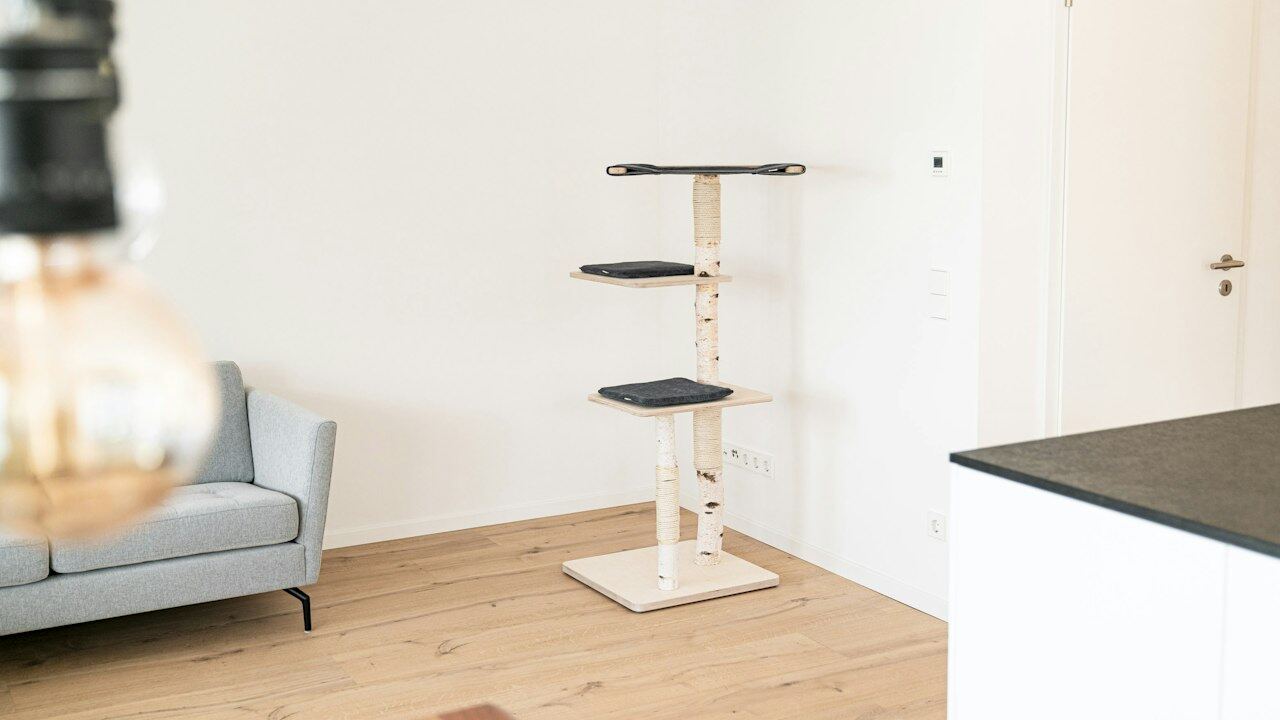
Apartments give cats little ground room, so high perches and shelves give them escape and territory. Vertical space also keeps a cat out of a toddler's reach.
- Add a cat tree, wall shelves, or a window perch for climbing and resting.
- Give the cat an upper escape when the child is running below.
- Place the perch away from busy doorways so the cat feels safe.
- Rotate toys to keep indoor cats active and less bored.
Manage mess and cleaning
In tight rooms, fur, litter, and food spills show quickly. A regular cleanup routine keeps the apartment healthy and prevents odor buildup.
- Sweep or vacuum floors and mats on a set schedule to control fur.
- Scoop litter daily and keep the box on a wipeable surface.
- Store food and trash sealed and out of reach of small children.
- Use washable mats and throws where the pet rests near the living area.
Exercise and stimulation indoors
A small apartment limits roaming, so pets need planned activity to stay calm and burn energy. Bored or restless pets are more likely to pace, guard, or annoy children.
- Dogs get walks and active play outside on a regular schedule.
- Cats use wand toys, puzzles, and short play sessions several times a day.
- Provide chew toys and puzzles that keep the pet occupied indoors.
- Watch for pacing, barking, or restlessness that signals too little exercise.
Age and size fit
Whether an apartment suits a family depends on the child's age, the animal's size, and its energy level. A high-energy large dog may struggle in a small space; some cats and calm breeds adapt well.
- Infants (0–1): protect sleep zones; keep the pet's retreat and feeding area separate.
- Toddlers (1–3): use gates to separate spaces when hands are busy; clear clutter they can reach.
- Preschoolers and older: share supervised space, but keep rest and food zones protected.
- Match the pet to the space: consider energy level, size, and exercise needs before adopting.
Common mistakes to avoid
Small-space problems come from overcrowding the pet, skipping exercise, or letting clutter pile up. Good zoning and routine make an apartment workable.
- Wrong: Treating every room as open shared space. Right: set distinct rest, play, and retreat zones.
- Wrong: Skipping walks because the apartment is small. Right: keep outdoor exercise and indoor play regular.
- Wrong: Storing food and litter openly. Right: seal and screen supplies away from children.
- Wrong: Adopting a high-energy large dog without a plan for exercise. Right: match breed and energy to the home.
Frequently asked questions
Can a dog and a baby live in a small apartment?
Many do, with clear zoning, regular walks, safe separation when unsupervised, and a protected sleep area. The dog's energy level and exercise needs matter most.
How do I give my cat space in a tiny apartment?
Use a cat tree, shelves, or a window perch for vertical space and an escape upward. Keep its box and bed in a quiet corner away from running kids.
What cleaning routine keeps a small home with pets?
Vacuum or sweep on a schedule, scoop litter daily, wash bedding and mats, and store food and trash sealed. Regular cleanup controls fur and odor before it builds.
Which pets adapt best to apartment life?
Calm, lower-energy dogs and most cats adapt well; high-energy or large breeds need daily exercise and room to move. Consider the individual animal, not the breed label alone.
How do I reduce pet hair in a small apartment?
Groom regularly, wash bedding and throws, vacuum upholstery and floors, and keep the pet's rest mat away from the baby's feeding and sleeping area.
Where this guidance comes from. We are a general parenting-and-pets editorial team, not a veterinary or pediatric practice. We cross-check our guides against public guidance from the CDC Healthy Pets, Healthy People. These are starting points for your own reading, not a diagnosis for your family or pet.
Not professional advice. This guide covers general household and safety information. For your child's health or your pet's behavior and medical care, contact your pediatrician or veterinarian directly. Do not rely on a website for urgent decisions.